
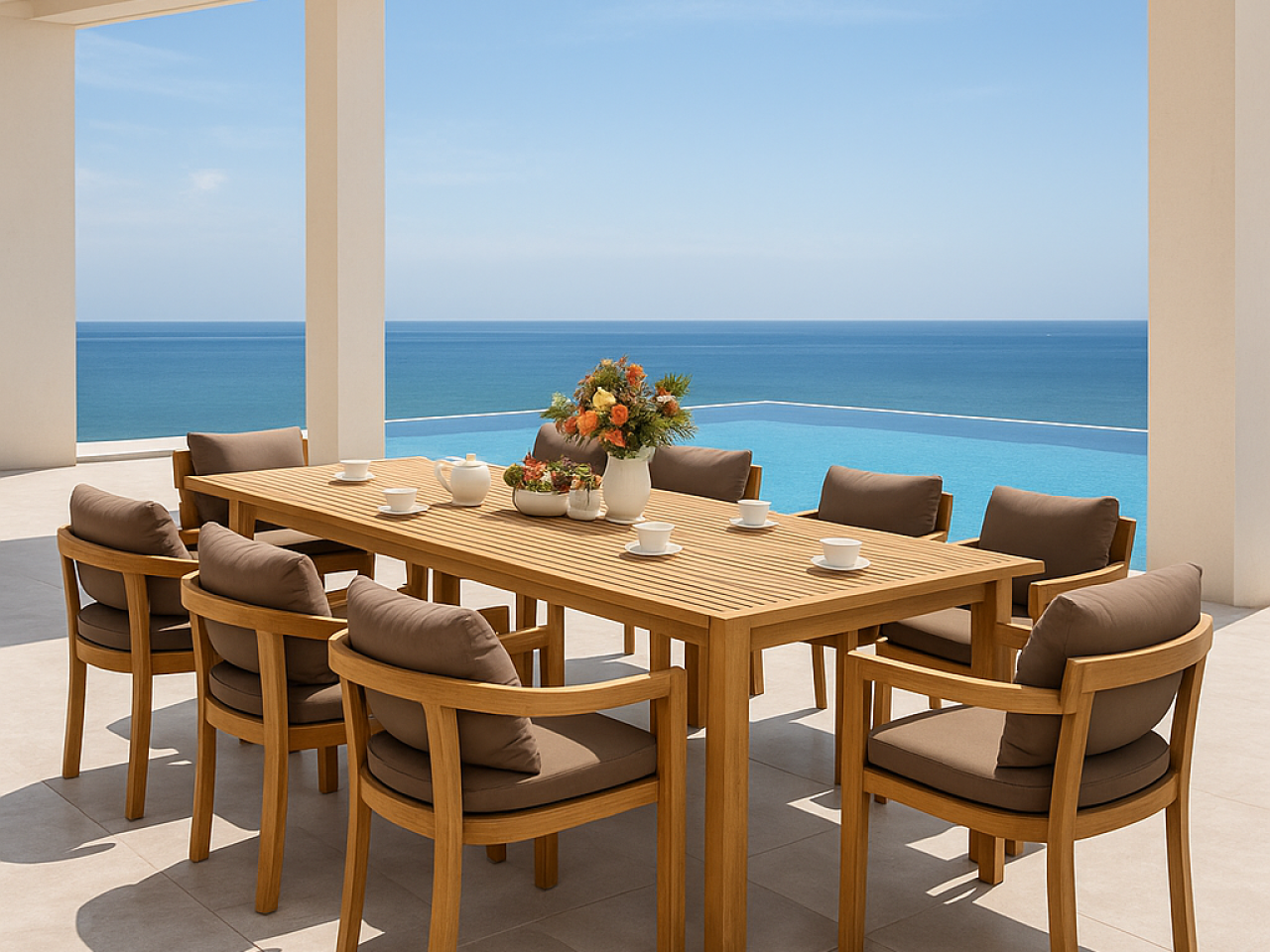
How to Care for Teak Furniture
Maintenance, Weathering, and Longevity
Why Teak Furniture Needs Care
Teak furniture has long been considered the gold standard for outdoor furniture. From luxury villas and seaside resorts to private gardens, outdoor teak furniture is chosen for its durability, beauty, and timeless appeal. Many people assume that teak requires no maintenance at all because of its natural oils and resistance to rot. However, while teak is more resilient than most woods, proper teak furniture care ensures it not only lasts for decades but also maintains the aesthetic appeal you desire. The key question is: does teak truly need no care at all?
How Different Weather Affects Teak
Outdoor conditions are the main factor affecting teak outdoor furniture durability. While teak is naturally weatherproof, different climates still leave their mark:
- Sunlight: Prolonged UV exposure causes the golden color of teak to fade, making the surface dry and increasing the risk of cracks.
- Rain: Rainwater speeds up the weathering process, turning the wood into a silver-gray patina. Thanks to natural oils, however, the wood does not rot.
- Cold: Unlike many other woods, teak resists shrinking and expanding in cold climates, maintaining its structural integrity.
- Coastal air: Salt spray is more damaging to metal fittings than to teak itself, but it can cause surface buildup that needs cleaning.
- Wind and dust: Strong winds can roughen the surface, making regular cleaning necessary.
The Natural Weathering Process of Teak
One of the unique traits of teak outdoor furniture is its natural aging process. Fresh teak starts with a rich golden-brown tone, often admired for its warm elegance. Within 6–12 months of outdoor exposure, the wood naturally develops a silver-gray patina. This weathering process is purely aesthetic; it does not compromise the strength or weatherproof qualities of teak. Many homeowners love this aged teak furniture look because it blends effortlessly into natural landscapes. However, if left unmaintained, the surface can become rougher and more prone to staining.
Table: Teak Outdoor Natural Weathering Process Overview
Stage | Time Frame | Appearance Change | Texture Change | What’s Happening |
Initial State | When brand new | Warm honey-gold or golden brown color, uniform in tone. | Smooth and oily to the touch, thanks to natural oils. | The original, factory state showcasing teak’s initial beauty. |
Stage 1 | Weeks to months | Color darkens quickly, turning to a deeper dun brown or tan. | Still relatively smooth, but the oily feel begins to diminish due to exposure. | Ultraviolet (UV) rays and oxygen cause oxidation on the wood’s surface. This is the fastest stage of change. |
Stage 2 | 6 months – 2 years | Light grey spots or streaks begin to appear on the surface, gradually expanding and connecting. Color becomes uneven. | Surface becomes increasingly dry and rough, losing its smoothness. | UV radiation degrades the surface cellulose, revealing the weather-resistant natural silicates and dark grain. |
Stage 3 | After 2-3 years | Develops a uniform, elegant silvery-grey appearance. The style is consistent, full of a weathered and natural beauty. | Overall texture is rough and dry, but very stable. | The weathering process is complete, forming a stable patina. This is only a surface change; the wood remains structurally sound and durable underneath. |
Weathering is purely a cosmetic change. Teak’s natural oils and high density ensure that beneath its silver-gray surface, its resistance to decay, waterproofing, and structural integrity remain largely unaffected.
Areas covered by cushions or shaded from direct sunlight weather more slowly, potentially causing temporary color variations. Regularly rotating cushions promotes even weathering. This process is entirely reversible.
Even after turning silver-gray, the original honey-golden hue can be restored by scrubbing with specialized cleaners and re-oiling. The silver-gray patina is regarded as a subtle, sophisticated aesthetic embodying timeless charm—a desired effect rather than a flaw.
How to Maintain the Golden-Brown Color
If you prefer your teak table and chairs to retain their warm, golden tones, regular treatment is required. Applying teak oil or teak sealer once or twice a year helps preserve the fresh look. Always clean the surface before applying oil to prevent dirt from being sealed in. The main benefit is that your teak furniture looks new and polished, ideal for luxury settings like a teak patio dining table in a villa. However, the drawback is that oiling requires consistency; if skipped, uneven color patches may occur.
How to Maintain the Silver-Gray Look
For those who love the natural silver-gray patina of weathered teak, maintenance is simpler. Do not apply oils; instead, allow the furniture to weather naturally. Regular cleaning with mild soap and water prevents blotchy spots or mildew growth. This approach gives the furniture a timeless, rustic charm, making it perfect for teak bench outdoor pieces in parks or coastal homes. The key is to keep the surface evenly weathered rather than letting stains accumulate.
Cleaning and Repairing Teak Furniture
Cleaning teak furniture is straightforward. Use warm soapy water and a soft brush to remove dust and stains. Avoid using pressure washers, as they can damage the wood fibers. For older pieces, light sanding restores smoothness. If deep stains appear, a specialized teak cleaner can help. For accessories like a teak chaise lounge chair near a pool, rinsing off chlorine or salt water is essential. Regular inspection of screws and fittings is also recommended, especially in coastal environments.
Pros and Cons of Aged vs. New Teak
New teak furniture is admired for its golden shine and smooth texture, making a teak dining table and chairs set an eye-catching centerpiece. However, it will naturally weather over time. Aged teak, by contrast, is more stable, less likely to crack, and displays the much-loved silver-gray tone. The choice depends on your aesthetic preference: new teak for a modern polished look, aged teak for a rustic, timeless character.
Conclusion: Why Proper Care Matters
Teak is naturally one of the most durable materials for outdoor furniture. Whether you prefer the golden shine of new teak or the weathered silver-gray of aged teak, proper care ensures your investment will last for decades. From cleaning teak furniture regularly to protecting it from extreme damage, small efforts go a long way. With care, a teak patio dining table, teak bench outdoor, or teak chaise lounge chair can serve your home or resort for generations.
you may also like
Why are velvet sofas the best choice for pet owners?
Why are velvet sofas the best choice for pet owners? Table of Contents I. Introduction: The Pet Owner’s Sofa Nightmare For many pet owners, choosing a sofa feels like a constant compromise between style and survival. You crave the luxurious, shimmering look of a velvet sofa, but the “common wisdom” tells you to stick to […]
Material Aesthetics and Selection Logic: A Comprehensive Guide to Choosing the Perfect Coffee Table with Drawers
Material Aesthetics and Selection Logic: A Comprehensive Guide to Choosing the Perfect Coffee Table with Drawers Table of Contents I. Introduction: The Intersection of Material and Function In the hierarchy of living room furniture, the coffee table often serves as a silent anchor of the space. While the sofa provides comfort, the coffee table provides […]