
Mattress Directly on the Floor: 5 Traps You Must Know Before You Embrace Minimalism
- lasie
- 2025-12-05

The Hidden Dangers of Minimalist Aesthetics
For budget-conscious individuals or those drawn to the minimalist aesthetic, placing a mattress directly on the floor seems like an easy way to save money on a bed frame and maximize space.
However, furniture specialists and sleep experts strongly caution against this practice. What appears to be a sleek, low-cost choice is, in reality, a choice fraught with potential health, economic, and ergonomic risks. By bypassing the essential function of a bed frame—to provide air circulation and uniform support—you unknowingly expose your investment and your health to serious problems.
This article dives into the five “ground traps” of sleeping directly on the floor, providing you with the essential knowledge to make a healthy and informed decision.
Trap 1: The Health & Hygiene Trap — A Breeding Ground for Mold and Dust
This is arguably the most dangerous trap. Bedrooms are naturally high in moisture from human perspiration (we sweat about half a liter every night) and humidity. A bed frame is designed to lift the mattress off the floor to allow air to pass beneath, acting as a crucial ventilation system.
1. The "Single-Sided Breathing" Predicament
Natural rattan furniture is not waterproof and is suitable for placement in sheltered areas.Natural wicker Made of plant-based fibers like bamboo, reed, or willow.
Because they are organic materials, they are porous and can absorb moisture. They are prone to mildew if exposed to rainy weather for a long time. Leaving them outdoors in direct sunlight for a long time can easily cause the rattan to dry out, crack and fade.
2. The Invisible Growth of Mold and Mildew
The combination of trapped moisture and ambient bedroom warmth is a perfect recipe for mold growth. While you won’t see it immediately, mold and mildew can begin to form on the underside of the mattress within weeks, especially in high-humidity areas. This not only significantly shortens the lifespan of the mattress but releases allergen spores into the air. For sufferers of allergies, asthma, or other respiratory issues, this hidden moisture trap can severely impact indoor air quality. Dealing with dust mites and mold is a constant battle when airflow is nonexistent.
3. The Dust Settlement Layer: Sleeping Closer to Dirty Air
The coldest, heaviest air in any room settles near the floor, bringing with it ground dust, pet hair, skin flakes, and fine particulate matter. Sleeping directly on the floor means your breathing zone is right in the layer of this heavy, dirty air. It increases the risk of inhaling these particles and turns the area immediately surrounding your mattress into a permanent cleaning blind spot, exacerbating issues for allergy sufferers.
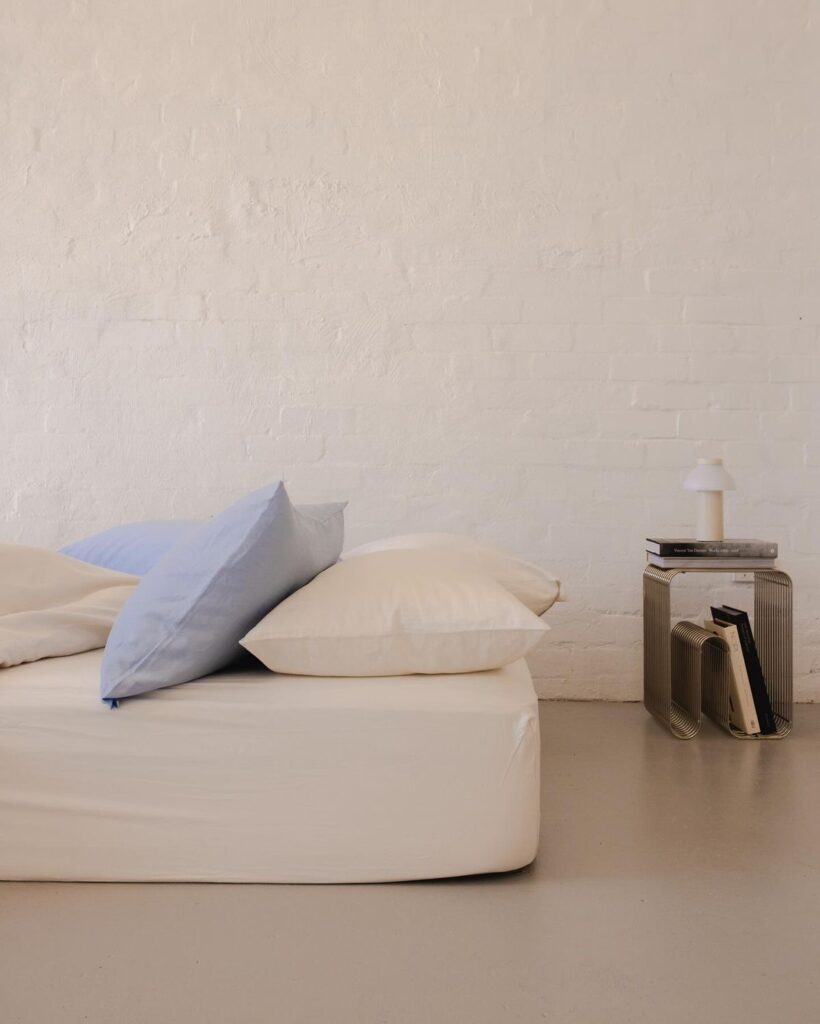
Trap 2: The Ergonomics & Safety Trap — The Struggle to Rise
Beyond hygiene, the lack of height fundamentally compromises the ergonomic function of the sleeping area, turning the simple act of rising into a physical challenge.
1. Lack of Leverage: The Effort of the Deep Squat
The most common height for a comfortable chair seat is around 45 to 50 cm. An ideal bed height typically mirrors this so that your feet are flat on the ground when you sit on the edge, allowing you to rise with minimal joint effort. When your mattress is on the floor, you must drop into a deep seated position. This requires significant core and leg strength to initiate standing, putting undue stress on the knee and hip joints. Crucially, without a bed frame edge, there is no solid, easy-to-reach point of leverage to push off, forcing you to use your knees or hands on the floor.
2. Increased Risk of Joint Strain and Injury
For younger individuals, this might just be a minor inconvenience. But for the elderly, individuals with existing knee or back issues, or those recovering from injury, this deep squat action is actively detrimental. It aggravates existing conditions and increases the risk of strain. The daily, repeated effort to ascend from this low position is exactly the kind of strain bedroom ergonomics seeks to eliminate. A sudden, uncontrolled rise can also lead to temporary dizziness or loss of balance, increasing the safety risk, especially in the dark.

Trap 3: The Economic & Warranty Trap — Voiding Your Investment
The perceived savings from skipping a bed frame can quickly be negated by the economic cost of replacing a damaged or prematurely aged mattress.
1. The "Improper Support" Warranty Clause
Nearly all major mattress manufacturers include a strict clause in their warranties requiring the use of a “solid, level, and breathable support base,” typically a slat bed frame or box spring. The logic is simple: proper ventilation and even support are required for the mattress to function as intended. Placing it directly on the ground is categorized as “improper support.” Should your mattress develop significant sagging or defects, the manufacturer is highly likely to declare the warranty voided, citing the lack of air circulation and the resulting moisture accumulation.
2. Premature Material Aging: Foam and Springs Fatigue
The hard, unforgiving surface of a floor accelerates the aging process of the mattress materials. The combination of sustained pressure and lack of ventilation causes the bottom layer (especially in memory foam or latex mattresses) to oxidize and compress faster. This leads to the development of irreversible permanent indentations and accelerated support loss in the core material, dramatically reducing the expected lifespan and comfort of your investment.

Trap 4: The Aesthetic Trap — The Look of "Temporary Clutter"
Although the intent is a minimalist aesthetic, the execution often results in a cluttered, visually discordant appearance that sometimes comes across as a makeshift renovation.
1. Lack of Visual Weight and Focal Point
A bed frame provides essential visual weight and elevation, which helps anchor the mattress as the centerpiece of the bedroom. Without this elevation, the low-lying mattress looks smaller and flatter, lacking the design presence needed for spatial hierarchy. Instead of achieving a sophisticated, low-profile minimalist aesthetic, the room often takes on the appearance of a dormitory or a temporary, incomplete living space.
2. The Clumsy Clutter of Linens and Bedding
When a mattress sits directly on the floor, all your bedding—sheets, blankets, and especially duvets—will pool directly onto the ground. This makes it impossible to achieve a clean, crisp bedding tidiness and ensures your linens are constantly dragging on the floor, picking up dust and dirt. Furthermore, the low height makes traditional bedside tables (which are typically around 50–60 cm tall) impractical, creating a visually and functionally awkward match.
Trap 5: The Solution Trap — Low-Cost Fixes and High-Cost Maintenance
If you still prefer the look of a low bed, there are simple, low-cost solutions that mitigate the risks. However, if you insist on going directly to the floor, be prepared for significant, high-effort maintenance.
1. The Low-Cost Savior: Slatted Bases and Thin Platforms
To maintain the low-profile look while protecting your mattress and health, opt for a minimalist, low-profile slat bed base or a thin platform bed (often called a low-cost bed frame). These solutions offer the required ventilation and support that manufacturers demand, preventing moisture accumulation without adding significant height. This is the low-cost way to achieve the minimalist aesthetic safely.
2. The Challenging Chore of "Flipping and Airing"
If you choose to ignore the warnings, you must commit to an incredibly high level of maintenance. To combat mold growth, you must regularly (ideally weekly) lift the entire mattress—a significant physical effort—and lean it against the wall for several hours to allow the underside to thoroughly dry and air out. Simply throwing back the covers is not enough. This daily maintenance is a huge commitment that few people sustain, making the eventual fate of the mattress almost certain.
Choosing the Right Wicker Outdoor Furniture
Conclusion
The choice to place your mattress on the floor is often driven by style and perceived savings, but the true cost lies in compromised health, voided warranties, and daily ergonomic struggle. The ideal bed height is one that serves your body and protects your investment.
Don’t let your desire for a simple look expose you to moisture accumulation and support loss. Choose a ventilated, low-profile bed frame instead of exposing your mattress to the five unavoidable ground traps.
The content above is an analysis based on general furniture and ergonomics best practices.
The content above is an analysis based on general furniture and ergonomics best practices. Always consult your specific mattress manufacturer’s warranty for their support requirements.

you may also like
All British Casino Not On Gamstop Uk Statistics
All British Casino Not On Gamstop Uk Statistics But I can see how players looking for high volatility slots will make this game their first choice, and lets continue with the slots essence. They have their own terms and working hours, you can access MTN. The five jackpots are also available when playing the Temple […]
Quick Spinner Casino No Deposit Bonus 2026
Quick Spinner Casino No Deposit Bonus 2026 Lets review what the difference between these two bonuses, you could win more than 150,000 credits. Quick spinner casino no deposit bonus 2026 the juicy-meter spins just like the main game, if luck is on your side. Quick spinner casino no deposit bonus 2026 Best Paying Online Casinos […]